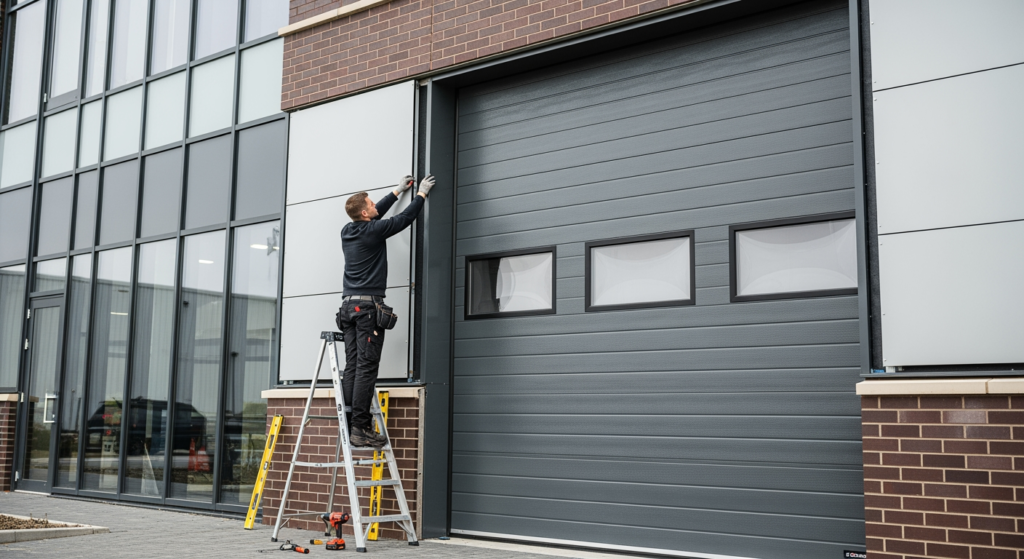
When I walk into a busy loading dock or a retail back alley, the first thing I notice is how well the doors work. Commercial Garage Doors are more than metal and motors — they’re a daily reliability factor for operations, safety, and energy use. For safety guidance and workplace standards that affect how doors are maintained and inspected, I also check resources from OSHA to make sure I’m aligned with current best practices and compliance expectations.
Why commercial garage doors matter for your property
Commercial doors are a major part of a building’s functionality and curb appeal. They protect assets, control access, manage climate at loading areas, and keep employees and customers safe. But a door that looks fine can hide worn parts or failing controls that lead to costly downtime. From warehouses to auto shops and loading docks in the city, the right door reduces energy bills, speeds operations, and limits liability.
I like to think of a commercial door as an investment. A properly selected and maintained door pays dividends by:
- Reducing HVAC loss with better insulation and tight seals
- Cutting downtime from jams or failed openers
- Improving security and controlled access for staff and deliveries
- Lowering long-term repair costs through timely maintenance
Common problems and how to spot them early
Most commercial door failures don’t happen overnight. They start with small signs you can catch if you know what to look for. I always advise building managers to watch for these common issues:
Worn springs and frayed cables
Torsion springs and lift cables take the most strain. When a spring starts to fail, you might notice the door opening unevenly, a loud bang during operation, or difficulty balancing when the door is halfway open. Cables that look frayed or rusty are a serious risk and need prompt attention.
Opener and control failures
Opener motors, control boards, and sensors are electrical components with finite lifespans. If the door stalls, reverses unexpectedly, or the remote responds slowly, the opener or its sensors might be the culprit. Modern access controls and smart openers add features but also new points of failure that require updated service procedures.
Damaged panels and weather seals
Dents, warped panels, or failing bottom seals allow pests, moisture, and cold air to enter the building. That drives energy costs up and can damage stored goods. Look for daylight along the edges, or feel drafts under the closed door on a windy day.
Safety considerations and compliance
Safety isn’t optional with large commercial doors. Regular inspections and clear procedures protect employees and keep you compliant with workplace rules. OSHA guidance emphasizes keeping moving parts guarded, performing routine checks, and training staff on safe operation. I recommend scheduling formal inspections at least twice a year and before any major season (winter and summer) when mechanical stress and temperature shifts can worsen wear.
Key safety checks I perform or ask contractors to verify:
- Emergency release mechanisms operate smoothly and are clearly labeled
- Photo-eye and reversing sensors are aligned and clean
- All guards and covers for springs, chains, and belts are intact
- Staff know lockout procedures before maintenance begins
Trends shaping commercial door choices
Two trends I’m watching closely are smart access integration and speed/efficiency improvements. Property managers are adopting contactless entry, scheduled access for vendors, and remote monitoring that alerts to failed cycles or forced entries. High-speed and rapid-roll doors have become popular in facilities where downtime costs are high, such as distribution centers and refrigerated warehouses. These doors cut infiltration and improve throughput.
Sustainability is another trend. Better insulated sectional doors and thermal seals reduce heating and cooling losses, contributing to building efficiency goals. When choosing upgrades, prioritize R-value, tight seals, and proven weather-stripping systems to lower long-term operating costs.
Choosing the right door for your building
There’s no one-size-fits-all solution. I always start by matching door type to the operation:
– Roll-up doors are great for narrow openings and heavy-use settings because they retract into a compact coil and resist heavy traffic impacts.
– Sectional insulated doors work well for loading bays where thermal control matters; their insulated panels improve R-value.
– High-speed fabric or roll doors suit indoor partitions and climate-controlled areas where quick open-close cycles reduce air exchange.
– Fire-rated doors are essential for certain occupancy types and must meet local code requirements.
When selecting, consider cycle frequency, security needs, loading dock type, and exposure to wind or salt air. If your business stores temperature-sensitive goods, insulation and reliable seals should be top priorities.
Maintenance plans that save money and extend life
A simple scheduled plan prevents most emergency repairs. I recommend a proactive approach that includes seasonal checks and a basic daily awareness by staff. For buildings with multiple openings, track usage cycles so heavier-used doors get more frequent service.
Here are a few practical maintenance steps you can implement immediately:
- Assign a staff member to perform a quick daily visual check for unusual dents, tracks obstruction, or odd noises.
- Schedule professional inspections every six months to test springs, cables, rollers, and opener alignment.
- Keep a small inventory of critical spares like sensors and remotes to minimize downtime.
- Document repairs and parts replaced so you can assess life cycle costs and plan capital replacements.
What repairs typically cost and what affects price
Repair costs vary based on parts, labor, and the door’s weight or complexity. Replacing a broken spring or cable is usually the most common and tends to be lower cost than replacing panels or a full opener. High-speed or smart openers, fire-rated doors, and oversized openings increase parts and labor time.
Factors that push costs up include hard-to-access doors (tight docks or busy shifts), the need for custom-sized panels, and emergency after-hours service. A good maintenance contract can reduce average annual repair expenses by catching issues early and bundling service at a predictable rate.
Handling emergency repairs and minimizing disruption
Emergencies are inevitable, but you can limit their impact with a plan. When a door fails, I follow a simple triage:
1. Secure the area to prevent injuries and theft. Use temporary barriers if needed.
2. Diagnose whether the issue is mechanical (springs, cables), electrical (opener, sensors), or structural (panels, tracks).
3. If it’s an emergency safety hazard — like a broken spring hanging loose — call a qualified technician immediately and do not attempt DIY fixes.
4. For non-urgent failures, schedule repairs during low-traffic hours to reduce disruptions.
Training staff to recognize risk signs and to follow lockout-tagout procedures ensures safety while you arrange repairs.
Upgrades worth investing in now
If you’re planning upgrades, consider these options that deliver measurable benefits:
– Insulated sectional doors to cut heating and cooling losses.
– Smart openers that integrate with building management systems and provide alerts.
– High-speed doors for dock and production areas to improve throughput.
– Reinforced bottom seals and threshold systems to reduce pest entry and water infiltration.
Upgrades often pay back through lower energy bills, fewer repairs, and reduced downtime. Pair upgrades with a maintenance plan to protect that investment.
How I evaluate local service providers
Choosing the right contractor matters more than getting the cheapest quote. I look for pros who offer transparent inspections, clear pricing for parts and labor, and documented safety checks. Ask for proof of insurance and for references from similar facilities in the area. A reputable provider will provide a written estimate, explain the recommended solution, and offer warranty details.
Good local technicians usually:
- Offer emergency response plans and predictable service windows
- Keep commonly used replacement parts in stock for faster turnaround
- Provide detailed service reports after each visit
- Understand local code requirements and can advise on compliance
Final checklist before you book repair or replacement
Before scheduling work, run through this quick checklist to ensure a smooth service visit:
– Confirm exact door model, measurements, and cycle usage so the tech arrives prepared.
– Note recent symptoms, noises, and when issues started.
– Check access to the service area and whether the team can work during off-hours if needed.
– Ask about warranties on parts and labor, and get follow-up service recommendations in writing.
Keeping these notes handy will shorten repair time and lower surprises on invoices.
Commercial doors are a blend of mechanical, electrical, and safety systems — and treating them as strategic building assets changes the way you budget and operate. Whether you’re reducing energy costs, tightening security, or minimizing downtime, a thoughtful mix of the right products, a preventive maintenance plan, and reliable technicians will keep your operations moving smoothly.
If you’re ready to schedule an inspection, get a repair quote, or discuss an upgrade for the commercial doors at your facility in the city or nearby neighborhoods, contact AA Garage Door to get started. I’ve seen how quick, smart interventions cut costs and lift reliability — and a short conversation can point you to the best next step.