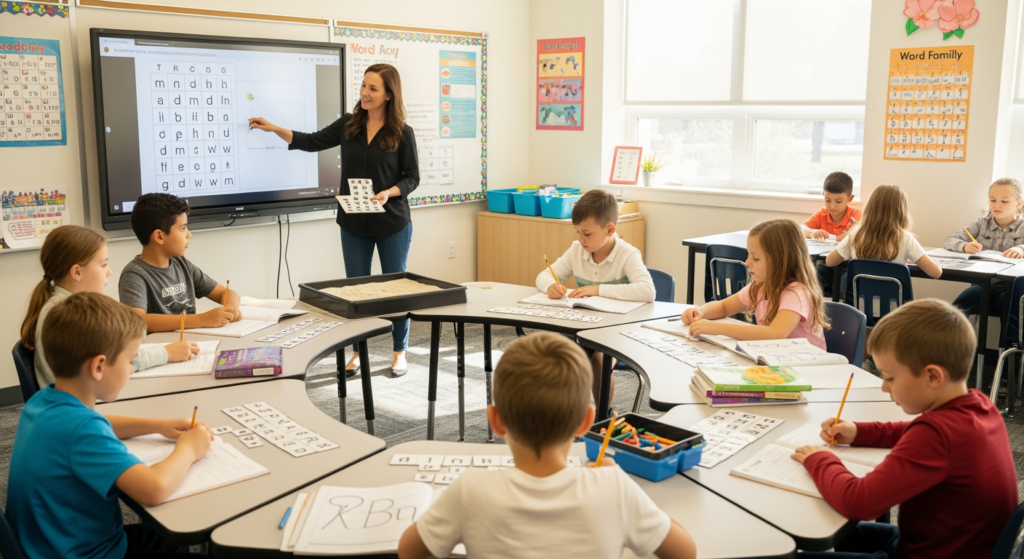
If your child struggles with reading, you’re not alone — and finding the right fit can change everything. I’ve seen how an Orton Gillingham school Georgia approach can unlock confidence and skill for kids who need structured literacy. For context about national literacy priorities and supports, the U.S. Department of Education provides useful guidance on evidence-based reading instruction and early intervention strategies, which aligns closely with Orton-Gillingham principles: Department of Education.
What Orton-Gillingham means — in plain language
Orton-Gillingham isn’t a single curriculum you buy off a shelf. It’s a set of teaching principles focused on structured, explicit, sequential, and multisensory instruction designed for students who learn differently. I like to think of it as teaching reading the way you would teach math facts: deliberately, step-by-step, with plenty of guided practice and review until fluency develops.
Basic features include direct instruction in sounds and letters, systematic progression from simple to complex patterns, consistent practice, and multisensory activities that involve seeing, saying, and doing. That combination helps students with dyslexia or other language-based learning differences form solid neural connections for reading and spelling.
Why families across Georgia are turning to Orton-Gillingham schools
Across the state, parents are seeking programs that deliver measurable literacy gains and restore a child’s love of learning. In my experience, families choose Orton-Gillingham schools because they want targeted support that general classroom interventions can’t always provide. This approach reduces frustration and accelerates progress in a way that often general instruction does not.
Common reasons families explore an Orton-Gillingham school include:
- Persistent decoding and spelling challenges despite classroom support.
- Early signs of dyslexia that parents want to address quickly and thoroughly.
- A desire for a predictable, research-aligned path to literacy that teachers can document and measure.
- Interest in multisensory methods that engage reluctant learners.
How to recognize reading difficulties early
One of the most important steps you can take as a parent is spotting trouble early. Children who struggle often show signs before third grade, and early intervention leads to much stronger outcomes. Here are practical indicators that warrant a closer look:
What I watch for in young readers
Slow word recognition, persistent letter reversals beyond kindergarten, avoiding reading aloud, poor spelling that doesn’t improve with practice, and difficulty connecting letters to sounds all suggest that a structured screening or evaluation could help. A formal evaluation from a reading specialist or educational psychologist can clarify whether dyslexia or another language-based issue is present, and it will guide the right next steps.
What to look for in an Orton-Gillingham school
Not every program that claims “Orton-Gillingham” delivers the same level of fidelity. I recommend a short checklist when you’re evaluating schools or tutors so you can compare apples to apples and feel confident about your choice.
- Trained staff: Ask whether teachers are-certified or have completed Orton-Gillingham training and supervised practicum hours.
- Structured curriculum: The program should use a sequential scope and sequence with clear assessments and progress monitoring.
- Multisensory delivery: Look for lessons that combine visual, auditory, and kinesthetic activities.
- Individualization: Lessons should be tailored to the student’s current skill level with frequent review.
How Orton-Gillingham instruction typically works day to day
When I observe an Orton-Gillingham classroom or tutoring session, a predictable rhythm stands out. Lessons are concentrated and purposeful, usually 30–60 minutes for individualized instruction and longer for small-group settings. Here’s a simple breakdown of what a typical lesson might include and how it builds reading skill:
Lesson flow and what to expect
Lessons begin with review of previously learned material to build automaticity. The teacher then introduces or practices a focused grapheme-phoneme correspondence or a spelling pattern in a highly scaffolded way. Students participate in multisensory activities — for example, forming letters in sand while saying the sound or tapping syllables — and the lesson ends with controlled practice and a short assessment of mastery that guides the next day’s plan.
Simple home strategies that support Orton-Gillingham work
Progress in school is faster when home routines reinforce lessons. Here are four practical, low-stress strategies parents can use at home that align with the Orton-Gillingham method and won’t take hours every night.
- Daily five-minute review: Practice recently learned letter-sound links or spelling patterns for five minutes to keep skills fresh.
- Read together with purpose: Choose short, decodable texts that match the child’s current skill level and discuss the words and sentence structure.
- Use multisensory cues: Encourage your child to trace letters while saying the sound or tap syllables in longer words to reinforce segmentation.
- Celebrate small wins: Track daily progress on a visible chart and praise effort to build confidence and motivation.
How outcomes look — realistic expectations
Parents often ask how quickly they’ll see improvement. Orton-Gillingham-based instruction is powerful, but it requires consistency. Many children show measurable gains in decoding and spelling within weeks of daily or near-daily intervention, and more substantial fluency and comprehension improvements typically emerge over months. Progress is individual: some students accelerate quickly while others progress in steady, incremental steps.
As you evaluate programs, ask to see progress monitoring data and examples of student work over time. A program that documents baseline skills and tracks growth with short diagnostic checks shows both accountability and an evidence-driven approach.
Trending topics shaping Orton-Gillingham schools now
A few trends are reshaping how schools deliver structured literacy in Georgia and nationwide, and they matter when you’re comparing options.
First, the structured literacy movement has strengthened policy and funding attention to evidence-based reading instruction in public and private settings. That shift means more teacher training opportunities and greater demand for programs that can demonstrate fidelity to research-backed methods.
Second, technology is expanding access. Teletherapy and virtual Orton-Gillingham sessions make specialized instruction available to families outside large metro areas, while digital multisensory tools supplement lesson practice. I encourage families to evaluate tech as a supplement—not a replacement—for trained, human-led instruction.
How the right program solves common pain points
Many families I work with tell me their frustrations: inconsistent support at school, unclear progress tracking, or endless worksheets that don’t translate to real reading. A well-implemented Orton-Gillingham school addresses those issues directly. Here’s how:
– Clear assessment and individualized plans mean instruction is targeted to gaps, not generalized practice. This reduces wasted time and accelerates skill-building.
– Multisensory methods engage learners who struggle with traditional visual-only approaches and help memory retention.
– Frequent progress monitoring gives parents concrete evidence of growth and helps educators adjust instruction quickly.
Questions to ask when you tour an Orton-Gillingham school in Georgia
I always advise parents to prepare five to seven focused questions before a visit. The answers tell you much more than brochures or mission statements. Examples that get to the core of quality include:
- How are staff trained and supervised in Orton-Gillingham methods?
- How is student progress measured and shared with families?
- What does a typical week of instruction look like for my child?
- How does the school coordinate with the public school system or outside therapists if needed?
Next steps — evaluating options and getting started
If you think an Orton-Gillingham approach might help your child, start with a short screening or consultation. A qualified school or trained clinician will offer a baseline assessment and recommend a plan that includes lesson frequency, estimated duration, and clear milestones. From there, ask about observation opportunities, parent training, and how homework or practice will be integrated into daily life.
Local support networks and parent groups can be an excellent source of referrals and firsthand impressions. When you visit programs in this area, watch lessons, review sample lesson plans, and request documentation of teacher training. Those steps separate polished marketing language from real classroom practice.
Finally, be ready to advocate for sustained, consistent instruction. Short-term programs can show temporary gains, but steady, structured work produces the most reliable long-term outcomes.
Choosing an Orton-Gillingham school in Georgia is a meaningful investment in your child’s reading life. If you’d like to explore a school that blends structured literacy with individualized care, consider scheduling a visit to learn how their approach might match your child’s needs. The Sage School is accepting inquiries and can share details about their Orton-Gillingham-aligned programming and how they support students across the state; visit The Sage School to learn more and request a consultation.