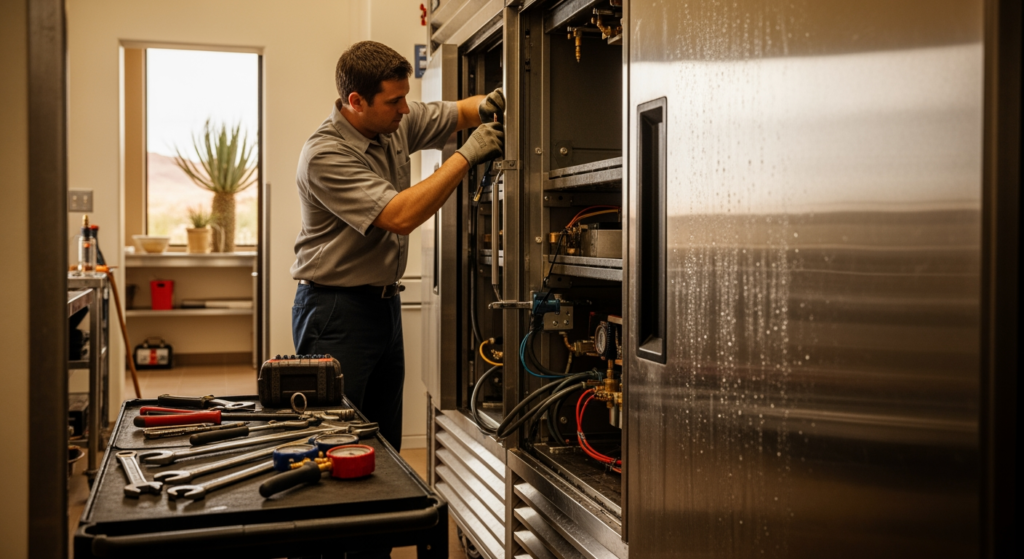
I work with commercial and light-industrial clients across southern Utah, so I know how critical reliable cold storage is for businesses here. If you’re searching for refrigeration services St George UT, you’re likely juggling product safety, rising energy bills, and tight operating windows. To get a quick snapshot of how population growth and local business demand are shaping service needs, check the U.S. Census homepage for recent data and trends: https://www.census.gov/.
Why refrigeration matters more in St George than you might think
St George’s heat and rapid seasonal swings make refrigeration systems work harder than in many other places. Humidity and dust can stress compressors and seals, and every hour a cooler is offline risks product loss, fines, or unhappy customers. In the last few years I’ve helped grocery stores, restaurants, floral shops, and medical clinics rethink how they protect temperature-sensitive inventory while trimming operating costs.
Local neighborhoods like Washington Fields, Bloomington Hills, and Red Cliffs show how a diverse economy—tourism, agriculture, healthcare and foodservice—creates different refrigeration needs. A bakery’s walk-in behaves differently than an ice cream display or a pharmaceutical fridge. Understanding those differences is the first step toward reliable service.
Common commercial refrigeration systems you’ll run into
When I walk a site I usually encounter a handful of system types. Knowing which you have makes conversations with technicians faster and helps you compare quotes fairly.
- Walk-in coolers and freezers — used by restaurants, grocery stores, and wholesale suppliers; they demand frequent door-seal checks and defrost management.
- Reach-in units and display cases — retail-facing equipment that needs both temperature control and visual appeal; lighting and gasket wear are common issues.
- Condensing units and rooftop refrigeration — centralized systems that serve multiple cases or rooms; condenser cleanliness and airflow are key.
- Packaged refrigeration and cold rooms — engineered systems for high-capacity storage often with dedicated control panels and backup plans.
Early warning signs your refrigeration system needs attention
Most failures have subtle precursors. Catching these early can save you from major downtime or expensive replacement. Here are the signs I tell business owners to watch for because they’re easy to spot during a quick daily walk-through.
- Temperature drift — steady small increases of 2–3°F over a few days can indicate refrigerant loss or failing thermostats.
- Excessive frosting or long defrost cycles — which point to defrost element failure or a stuck defrost control.
- Unusual noises — grinding, hissing, or rattling often mean mechanical wear, a failing fan motor, or vibration issues.
- High energy bills with similar production — a gradual utility increase usually indicates inefficiencies like dirty coils or poor seals.
How I diagnose problems fast — actionable steps you can take today
When a client calls, I run through a short checklist that often isolates the problem before I arrive. You can use this same approach to help your technician and reduce dispatch time.
Step 1: Verify temperature with a reliable thermometer placed where products normally sit, not just the case thermostat. Step 2: Inspect door gaskets for gaps or brittleness; warm light pressure on the seam reveals leakage. Step 3: Check condenser coils for dust, debris, or blocked airflow—these are quick wins that often improve cooling immediately. Step 4: Note any recent service, repairs, or power events; quick history helps avoid repeat visits.
Maintenance that truly extends equipment life
A good maintenance plan is the best insurance you can buy. I encourage clients to move beyond “call when it breaks” and adopt a practical schedule that fits their operation. Preventive maintenance reduces energy use, fixes small issues before they cause failures, and helps plan capital budgets instead of scrambling for replacements.
At minimum, include quarterly checks for light-duty sites and monthly checks for high-traffic foodservice operations. During each visit technicians should clean coils, inspect electricals for wear, test safety controls, calibrate thermostats, and confirm door seals and defrost cycles operate correctly.
Quick maintenance checklist for managers
- Keep condenser coils clean and unobstructed.
- Replace or repair worn door gaskets immediately.
- Log temperatures daily and flag excursions for service.
- Schedule seasonal preventative tune-ups before peak demand months.
Energy efficiency upgrades and trends to watch
Two trends are reshaping commercial refrigeration: smarter controls and cleaner refrigerants. Smart controls allow remote monitoring, setpoint scheduling, and early alarm notifications—useful here when summer spikes can push equipment harder. Low global warming potential (GWP) refrigerants and updated compressor technology are becoming standard, driven by new regulations and operating-cost advantages.
Upgrading to variable-speed compressors, modern evaporator fans, and LED-lit display cases reduces energy consumption, especially in climates with high cooling loads. In many cases, the energy savings and reduced downtime pay back the upgrade cost faster than expected.
Navigating permits, codes, and environmental rules
Refrigeration work can trigger local permitting and environmental compliance steps. Whether it’s refrigerant handling certifications or equipment placement restrictions, getting permits right eliminates future delays, fines, and rework. I always advise clients to verify permit needs before scheduling major retrofits or rooftop installations to avoid surprises.
If you deal with refrigerant types or larger HVAC conversions, make sure technicians have current certifications and the service provider documents recovery and disposal properly. That attention to detail protects your business and keeps projects on schedule.
Choosing a local service provider in the city
Selecting a partner is about more than price. I find the best providers combine technical knowledge, local experience, rapid response time, and clear communication. Here are the practical questions I recommend asking any candidate. Keep these handy when you call for estimates.
- Do you have experience with my equipment make and model, and can you share examples of similar jobs in the area?
- What is your average response time for emergency calls, and do you offer after-hours support?
- Do you provide written estimates, maintenance agreements, and parts warranties?
- Can you explain projected energy savings and expected payback for recommended upgrades?
Budgeting: repair, replace, or upgrade?
Deciding whether to repair or replace hinges on age, recurring failures, and energy costs. As a rough rule, if a compressor or major component has failed and the unit is over ten years old, replacement often makes more sense—new systems are significantly more efficient and use modern refrigerants. However, if the issue is a minor mechanical failure and the equipment has been well maintained, repair plus a preventive maintenance agreement can extend useful life and reduce immediate cost.
When evaluating proposals, ask for lifecycle cost estimates that include expected energy consumption, typical maintenance, and warranty coverage. That broader view avoids cost surprises and makes it easier to secure internal approval for upfront upgrades.
How a local team solves common pain points in this area
Local service teams bring value beyond technical fixes: they understand road access, climate-related stressors, and regional code nuances. I’ve seen providers reduce repeat calls simply by adjusting defrost cycles for the southern Utah climate or by relocating condensing units away from dust-heavy zones. A team that knows the community can tailor solutions that national chains may miss.
Emergency response is another local advantage. When a downtown business or a clinic in Red Cliffs faces a failure, same-day dispatch minimizes losses. Request references from nearby businesses in the city or surrounding neighborhoods to verify reliability and responsiveness.
Two trending topics currently shaping refrigeration choices
First, refrigerant transition: manufacturers and service firms are increasingly moving away from high-GWP refrigerants. This transition affects repair choices—some retrofits are possible, while other systems need replacement to accommodate new refrigerants safely.
Second, remote monitoring and predictive maintenance are gaining traction. IoT-enabled thermostats and cloud-based monitoring platforms flag irregularities before they become failures. For businesses with multiple sites in the region, centralized monitoring saves time and reduces emergency service costs.
Real-life examples and small wins that add up
I worked with a mid-sized grocery in the area that struggled with intermittent temperature drift. A technician found a partially blocked condenser and a failing fan motor; replacing the motor and installing a routine coil cleaning schedule solved the drift and cut the cooler’s energy use significantly. Another local café avoided a costly food loss when a remote-monitoring alert triggered a technician call before overnight temperatures rose.
Small measures—consistent log keeping, gasket checks, and scheduled coil cleaning—often prevent the largest losses. These are low-cost, high-impact tasks any manager can implement immediately.
Final checklist before you call for service
Before you pick up the phone, gather these details to speed up diagnosis and get the most accurate estimate:
- Make, model, and age of the unit(s).
- Recent temperature logs and any alarm history.
- A brief description of noises, smells, or visible damage.
- Preferred windows for service and access notes for technicians.
When you need dependable refrigeration services in St George, UT, I recommend choosing a local team that offers preventative plans, rapid emergency response, and transparent lifecycle cost estimates. If you want help setting up a maintenance schedule, evaluating a costly repair versus replacement, or understanding new refrigerant options, reach out and I’ll connect you with the right professionals. For trusted local commercial HVAC and refrigeration support, contact Nextech.