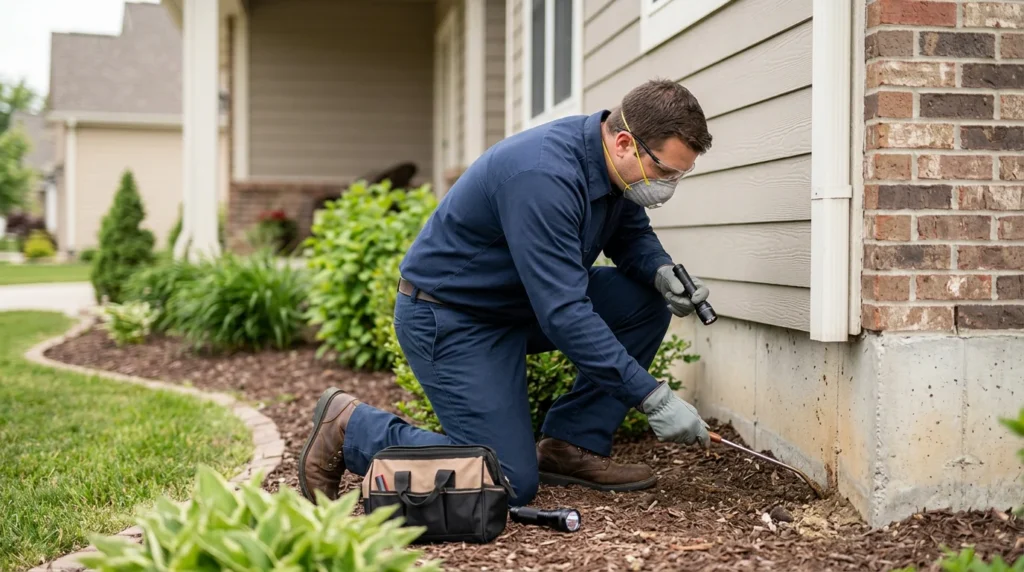
Quick answer: Termite control services usually include a detailed inspection, identifying the termite type and entry points, recommending a treatment plan (often liquid soil treatments, bait stations, or targeted wood treatments), and follow-up checks to confirm activity has stopped. You likely need service if you see mud tubes, damaged or hollow-sounding wood, swarming winged insects, or discarded wings—especially around foundations, crawlspaces, and window frames.
What a Professional Termite Visit Typically Covers
A solid termite appointment starts with a careful inspection of the places termites actually use: foundation walls, crawlspaces, sill plates, plumbing penetrations, expansion joints, and any wood that stays damp. The goal is to confirm termites (not carpenter ants), find where they’re feeding, and map the likely travel routes back to the soil.
After that, the technician should explain the treatment options in plain language and why one fits your home’s layout. Many companies offering termite control services will also point out conditions that make reinfestation more likely, like wood-to-soil contact, clogged gutters dumping water near the foundation, or a crawlspace that stays humid.
In Athens, a few local conditions often change what gets extra attention during inspection:
- Damp crawlspaces from humidity, drainage issues, or HVAC condensation, which pushes the inspector to check sill plates, joists, and piers closely.
- Wood-to-soil contact at porch steps, deck posts, or siding too close to grade, which becomes a priority for entry-point checks.
- Dense shrubs and mulch against the foundation, which can hide mud tubes and makes perimeter inspection more meticulous.
- Older pier-and-beam areas where access is tight, which can shift the plan toward targeted access points and thorough crawlspace probing.
Common Treatments and How They Differ
In Georgia, common approaches include liquid soil treatments and baiting systems. A liquid treatment creates a treated zone in the soil around and under the structure so termites pick up the product as they move through it. This can be a good fit when you want a continuous barrier and the soil can be accessed around the foundation.
Bait stations are placed in the ground and checked on a schedule. Termites feed on the bait and share it back to the colony, which can reduce the colony over time. Baits can be a practical choice when trenching and treating around the entire perimeter is difficult, or when you prefer a system that’s monitored and adjusted during follow-up visits.
Spot or localized wood treatments may be used for specific areas, but they’re usually not a complete solution for subterranean termites if the colony still has access from the soil. Ask what the treatment does to address the source, not just the visible damage. Any cost comparison between methods depends on access (crawlspace vs. slab, landscaping, tight perimeters) and what repairs are needed for existing damage.
Signs You Should Schedule an Inspection Soon
Swarmers (winged termites) inside the house are a strong reason to get checked quickly, especially if you also find small piles of discarded wings near windowsills or light fixtures. Mud tubes on foundation walls, piers, or inside a crawlspace are another classic sign; termites use them to travel while staying protected from air and light.
Inside, pay attention to wood that sounds hollow when tapped, bubbling or peeling paint that looks like water damage, and tight-fitting doors or windows that suddenly start sticking. Those symptoms can have other causes, but they’re common in areas where termites have been active or where moisture is feeding the problem.
What to do next
Call the same day if you see: (1) swarmers indoors, especially near windows or lights, or (2) mud tubes that look active (moist, intact, or rebuilding after being scraped).
Schedule within a week if you notice: discarded wings, suspicious wood damage, a recent moisture problem near the foundation/crawlspace, or a neighbor/adjacent unit reporting termites.
Monitoring can be reasonable if: you had a clean inspection recently, you’re seeing only occasional outdoor swarmers away from the structure, and there are no tubes or interior signs—while you still address moisture and wood-to-soil contact.
How to Get the Most Value From Service and Prevent Repeat Problems
Before treatment, clear access to the crawlspace door, move stored items away from foundation walls, and point out any leaks or damp areas you’ve noticed. After treatment, focus on moisture control: fix plumbing drips, keep gutters and downspouts moving water away from the house, and avoid stacking mulch or firewood against siding.
Ask for a clear scope in writing so you can compare proposals. A simple checklist to request includes:
- Areas inspected (interior, crawlspace/basement, attic, garage, exterior perimeter)
- Notes on evidence found and termite type suspected/confirmed
- A diagram and/or photos showing activity locations and risk conditions
- A treatment map (where product or stations will be placed and any access limitations)
- Follow-up interval (when rechecks happen and what gets measured/observed)
- Monitoring plan (what gets monitored long-term and what triggers a return visit)
If you want local help in Athens, GA, Athens Exterminating can walk you through inspection findings and the next steps for your home.