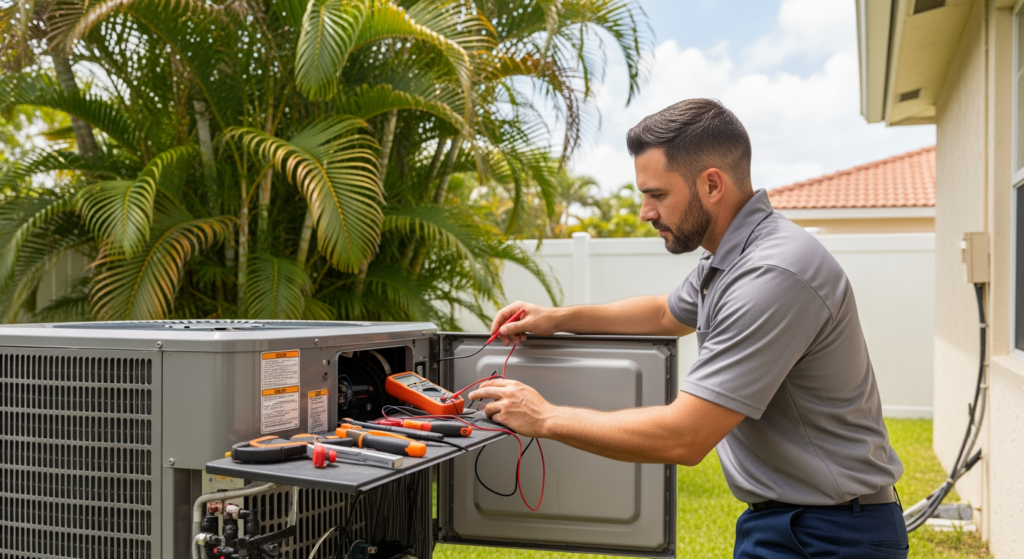
When your system sputters on a 90-degree afternoon, you’re not just annoyed — you’re under stress. I’ve helped homeowners across the area get back to comfortable living, and if you’re searching for ac repair west palm beach, you’re in the right place to learn what matters most. The U.S. Department of Energy notes that cooling makes up a large portion of household energy use, so quick, smart repairs not only restore comfort but can save money and reduce strain on the system during Florida’s long cooling season — and that matters whether you live near Downtown West Palm Beach, Northwood, or the lakeshore neighborhoods.
Why timely AC repair matters in West Palm Beach
West Palm Beach’s humid subtropical climate means air conditioning is nearly always running from spring through fall. When an air conditioner runs poorly, the consequences go beyond a slightly warmer house: higher electric bills, accelerated wear and tear, uneven cooling across rooms, and potential indoor air quality problems. Waiting to address a small issue can turn a simple fix into a full system replacement by the time the heat spikes.
I’ve seen split systems that could have been back to full efficiency with a simple refrigerant recharge and a $100 part that were instead replaced because the problem went unattended. Getting an expert in early often prevents bigger headaches and keeps your unit running reliably through hurricane season and peak demand periods for the electric grid.
Common AC problems I encounter locally
Some failures are universal; others are more common here because of salt air, humidity, and year-round use. Knowing the likely causes saves time when you call for service.
- Clogged or dirty air filters that restrict airflow, forcing the system to work harder and freeze up the evaporator coil.
- Refrigerant leaks and low refrigerant charge that reduce cooling capacity and can damage the compressor if not fixed.
- Electrical failures — worn capacitors, failing contactors, or loose wiring — that prevent the unit from starting or cause intermittent operation.
- Dirty condenser coils and obstructed outdoor units from landscaping or corrosion from coastal air, which reduce heat transfer and efficiency.
How I diagnose whether to repair or replace
A solid diagnosis is the backbone of a fair recommendation. I always start with a few checks that tell a big story: airflow across vents, temperature split between supply and return, refrigerant pressure, and a quick look at the outdoor unit. From there I consider age, repair history, energy efficiency, and parts availability.
Here’s the lens I use when deciding repair versus replace: if the system is under ten years old, the compressor is healthy, and the issue is a single component, a repair is usually the sensible choice. For systems older than 12–15 years, repeated failures, or those using phased-out refrigerants, replacement often yields better comfort and energy savings over the next decade.
Real costs and what affects price in this area
Cost is a major concern. Local pricing is shaped by parts availability, technician expertise, and the frequent need for quick response during heat waves. Typical repairs — like replacing a capacitor or contactor — are often affordable, while compressor replacements or major refrigerant repairs climb higher because of labor intensity and parts cost.
Key factors that influence cost include the unit’s brand and model, whether the condenser is easily accessible, and whether the system needs a refrigerant that requires special handling. In coastal neighborhoods, corrosion can add labor to remove and replace rusted fasteners, which changes the quote. I always advise homeowners to get a written estimate that explains parts, labor, warranty, and expected turnaround time so there are no surprises.
Emergency and same-day tips for hot afternoons
When a system fails on a sweltering afternoon, these steps can provide immediate relief and protect your equipment until a pro arrives. They’re quick, safe, and cost-free or low-cost.
- Switch ceiling fans on and close blinds to reduce solar load; fans make a room feel several degrees cooler though they don’t lower temperature.
- Check the outdoor unit for obvious obstructions like toys, yard waste, or excessive vegetation and carefully clear about two feet around it to improve airflow.
- Replace or inspect the air filter — a clogged filter can cause the evaporator to freeze so letting it thaw (turn off the AC and run the fan) helps diagnosis and repair.
- If you smell burning or see smoke, turn the system off at the thermostat and breaker and call for emergency service immediately.
Maintenance checklist that keeps systems reliable
Regular maintenance is the most effective way to prevent emergency trips and keep your monthly bills in check. A seasonal tune-up before temperature spikes is ideal, and I recommend a professional inspection at least once a year for most systems.
During a service visit, technicians should do the following:
- Clean evaporator and condenser coils, check refrigerant levels, and test for leaks.
- Inspect electrical components, test capacitors and contactors, and tighten wiring as needed.
- Verify thermostat calibration and measure airflow and temperature split for efficiency.
- Lubricate moving parts and clear condensate drains to prevent clogs and water damage.
How to choose a reliable technician in West Palm Beach
Finding the right technician is about a mix of credentials, local reputation, and clear communication. I look for HVAC companies that hold EPA 608 certification for refrigerant handling, NATE certifications on staff, and proof of liability insurance. Equally important is how they communicate: a good tech explains findings clearly, shows the failed parts when possible, and provides a written estimate with options.
When you call for service, ask about response time, diagnostic fees, warranty on parts and labor, and any guarantees on workmanship. In neighborhoods like El Cid, South End, and near Rosemary Square, many technicians have experience with older homes and high-efficiency retrofits — find one who understands your area’s specific needs.
Questions to ask before you book
These quick questions prevent miscommunication and help set expectations for the job:
- Do you charge a diagnostic fee, and is it applied to the repair cost?
- Are your technicians EPA certified and insured?
- What warranty do you provide on parts and labor?
- Can you provide references from recent local customers or examples of similar repairs?
Trending technologies and incentives to watch
Two big trends are changing how homeowners approach cooling: smarter controls and higher-efficiency systems. Smart thermostats are now common and can shave cooling costs when programmed properly, especially when paired with zoning or variable-speed equipment. Meanwhile, heat pump technology has improved for warmer climates, offering efficient cooling and the option for heating without a separate furnace in milder winter months.
Utility rebates and federal incentives sometimes offset the upfront cost of efficient replacements, and energy-efficiency upgrades often pay back over a few years in lower bills. The Department of Energy provides guidance on energy-saving HVAC upgrades and federal programs; checking available programs can reduce installation costs and boost long-term savings.
Common myths about AC repair — debunked
Myth: “If the AC turns on, it’s fine.” Not always. Systems can run but underperform, or run inefficiently and cost you more than a small repair would have. Myth: “I can DIY major refrigerant repairs.” Wrong — refrigerant work requires certification and proper equipment. Myth: “A bigger unit is always better.” Oversizing causes short cycling and poor humidity control; proper sizing matters.
How to budget for repairs and replacements
Budgeting ahead of time saves stress. I recommend setting aside a small emergency fund for HVAC repairs, especially if your unit is over a decade old. For major replacements, get at least two detailed estimates and compare not just price but equipment efficiency (SEER rating), warranty coverage, and expected lifespan. In many cases, investing in a higher-efficiency unit pays off with lower monthly bills and more consistent comfort.
Short-term savings vs long-term value
Sometimes the less expensive immediate repair is the right move; other times, replacement offers better value. If a unit has frequent failures, uses outdated refrigerant, or has a compressor issue, replacement often provides the best balance of comfort, reliability, and future savings. I weigh those trade-offs on each call so you can make an informed choice that suits your budget and timeline.
Preparing your home for the technician
Make the visit go smoothly by clearing access to the outdoor unit, ensuring the area around the indoor unit or attic panel is safe and reachable, and listing symptoms and when they began. If you have pets, secure them so the tech can work safely. Having prior service records handy helps the technician understand the system history and speeds up diagnosis, especially in older homes found across West Palm Beach and nearby islands.
Final thoughts and next steps
In West Palm Beach, staying proactive with your air conditioning pays off every summer. I’ve learned that homeowners who schedule seasonal tune-ups, replace filters regularly, and choose technicians who explain options clearly avoid the most disruptive failures. Whether it’s a small repair or planning a system upgrade, thoughtful decisions now lead to consistent comfort, lower energy bills, and fewer emergency calls when the temperature spikes.
If you’re ready to get a reliable technician on the job, or you want a second opinion before committing to a major repair, I recommend requesting a clear, written estimate that outlines parts, labor, and warranty. After years helping people in this area, I know the difference a knowledgeable, local pro makes — from Palm Beach to the neighborhoods north of Okeechobee Boulevard.
When you’re ready to schedule service or need an honest assessment of your system, contact Simple Action for dependable support in West Palm Beach, Florida.