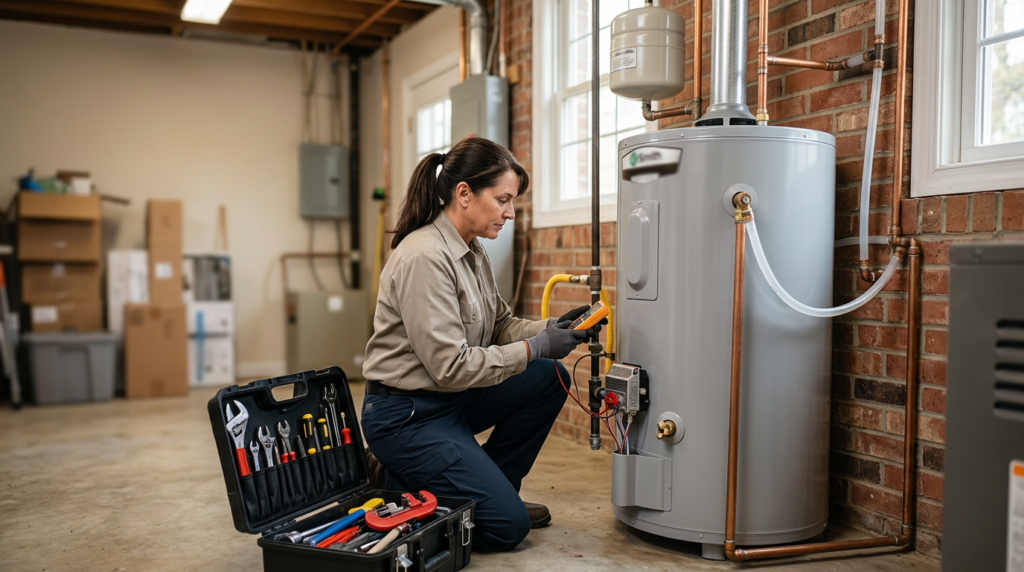
Quick answer: You likely need a repair if the tank is still heating consistently and the problem is isolated—like a faulty thermostat, heating element, relief valve, or a leaking connection. Replacement is usually the safer call when the tank itself is leaking, the water turns rusty, repairs keep recurring, or the unit is near the end of its typical lifespan (often around 8–12 years for many tank models).
Fast Clues That Point to Repair vs Replacement
Most water heater problems fall into two buckets: a part failed, or the tank is failing. Part failures are often repairable. Common repair-type issues include lukewarm water (bad thermostat or heating element), popping or rumbling (sediment buildup), a pilot that won’t stay lit (thermocouple or gas control issues), or water leaking from fittings above the tank (loose connections or a failing valve). If you’re looking for water heater repair Athens GA, describing the symptom clearly—no hot water, not enough hot water, slow recovery, odd noises—helps a plumber narrow it down quickly.
Use this quick checklist to make a first-pass call before you spend money twice:
Repair is often reasonable when: the leak is from a fitting/union/valve above the tank; the T&P relief valve or discharge piping is dripping; hot water is inconsistent but the tank body is dry; the unit is under roughly 10 years old and hasn’t had repeat issues.
Replacement is usually the safer bet when: water is coming from the tank body or bottom seam; rusty water persists after basic flushing; the unit is around 10+ years old and needs a major part (gas control valve, multiple electric components) or has recurring breakdowns; corrosion is visible on the tank itself.
Tank failure is different. Water pooling from the bottom seam of the heater, persistent rusty water, or visible corrosion around the tank body often means the tank is compromised. Once the steel tank itself starts leaking, repairs don’t reliably “fix” it; the leak typically returns or worsens. A unit that repeatedly trips the temperature-and-pressure (T&P) relief valve can sometimes be repaired, but it also deserves a careful safety check for overheating, excessive pressure, or a failing control.
Athens Water Conditions and Sediment Buildup
In the Athens area, many homes deal with some level of mineral and sediment accumulation in water heaters over time. Even when the water looks clear at the tap, tiny particles can settle in the bottom of the tank, especially on older units or in homes with higher water use.
That buildup can cause rumbling, popping, or “kettling” noises as the burner or elements heat through a layer of sediment. It can also shorten electric element life by making elements run hotter than they should, and it can slow recovery time because heat transfer becomes less efficient.
Flushing can help, but how often to flush is a practical, household-specific decision. A common general rhythm is once a year for many homes, sooner if you hear new noises, notice reduced hot-water output, or see gritty discharge during a drain. If flushing hasn’t been done in years, a plumber may recommend a cautious approach to avoid disturbing heavy buildup too aggressively.
What to Check Before You Call (Safe, Simple Steps)
You can rule out a few basics without tools. If you have no hot water at all, confirm power or gas: check whether a breaker is tripped for an electric heater, or whether the gas supply is on for a gas heater. For gas models, look through the sight glass for a status light and listen for ignition attempts—then stop if you smell gas and leave the area.
If you have some hot water but it runs out fast, the temperature setting may be too low or one electric element may be out. A sudden change in hot-water duration often points to a component issue rather than the tank. For visible leaks, dry the area and see where water reappears: leaks from the top connections or the T&P discharge pipe can be repairable, while water emerging from the bottom of the tank usually signals replacement. Avoid touching wiring or removing panels; electric water heaters can hold dangerous voltage even when they seem “off.”
What to Have Ready and What a Plumber Will Do Next
To speed up diagnosis, have a few details ready: the heater’s approximate age (or a photo of the data plate with model/serial), fuel type (electric, natural gas, propane), tank size if you know it, and a clear description of the symptom timeline (sudden vs gradual). If there’s leaking, take a couple photos showing where the water is first appearing (top connections, T&P valve/discharge pipe, or bottom seam) and whether the area is actively dripping or just damp.
During a service call, a plumber typically checks the likely failure points for your heater type. On electric units that often includes testing heating elements and thermostats, verifying safe wiring and proper voltage, and checking for signs of overheating. On gas units it often includes evaluating ignition/pilot behavior, the gas valve/control, burner condition, and venting/draft to confirm combustion gases are moving safely out of the home. For both types, they may also check water pressure, the expansion tank (if you have one), and the T&P relief valve function.
From there, you should expect one of three clear outcomes: a targeted repair (replace a failed part and verify operation), a maintenance fix (flush/descale, adjust settings, correct venting or pressure issues), or a replacement recommendation if the tank is failing or the repair path isn’t reliable. For local help coordinating the next steps and getting the heater safe and dependable again, contact Blueprint Plumbing Services LLC.