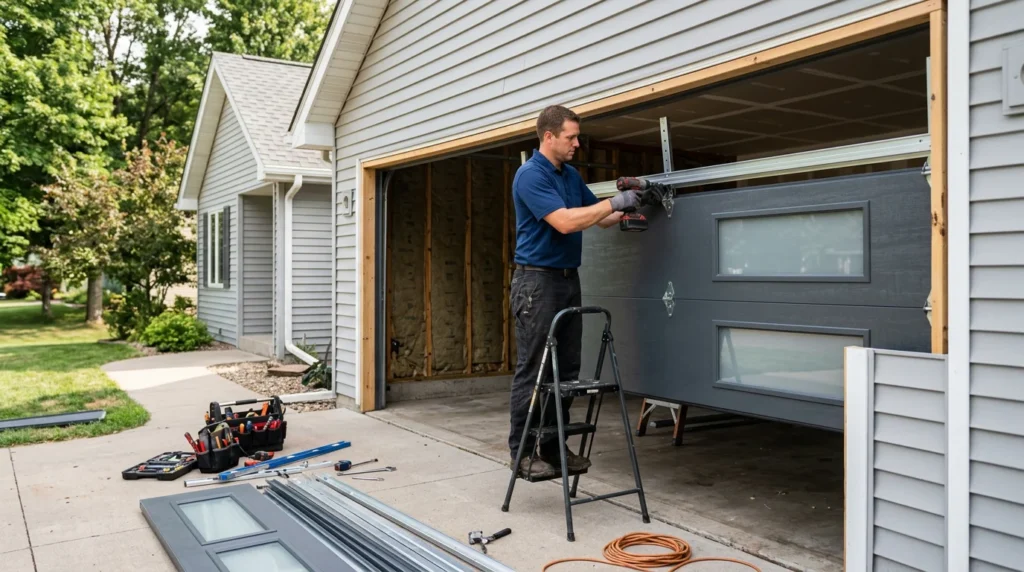
Quick answer: You usually need repair if the door is still square, the panels are solid, and the issue is limited to wear parts like springs, rollers, cables, sensors, or track alignment. Replacement is the better call when panels are bent, rotting, or badly rusted, the door repeatedly goes off-track, or parts are unavailable. Do a quick balance test; if the door feels heavy or unsafe, stop and schedule service.
Fast Clues You Can Check Before You Call
If your garage door suddenly won’t open, starts moving crooked, or slams shut, treat it as a safety issue first. A door that’s heavy to lift by hand (with the opener disconnected) often points to a broken spring. Loud grinding or squealing can come from worn rollers, dry hinges, or a track that’s out of alignment. If the opener runs but the door barely moves, look for a loose cable on one side, a broken spring, or a jammed roller.
Photo-eye sensors are another common culprit. If the door reverses as it’s closing or won’t close unless you hold the wall button, wipe the sensor lenses and check that both sensors point directly at each other. Also look for small obstructions in the tracks—pebbles, hardened mud, or a bent track lip can stop a door cold. If you’re searching for garage door service Baldwin WI, these quick checks help you describe the symptoms clearly and speed up the fix.
Cold-weather details matter around Baldwin. Snow or ice packed at the threshold can make the door hit resistance and reverse, and a stiff bottom seal can stick to frozen concrete. Road salt and winter moisture can also accelerate rust on hinges, bottom brackets, and the lower edge of steel panels, so include a quick look for flaking metal or swelling at the bottom corners.
A 60-Second Repair vs Replace Rubric
Use this quick rubric to decide what you’re likely facing before you spend time chasing parts.
Repair is likely if: the door looks square in the opening, panels aren’t cracked/rotted, and the problem is isolated to wear parts (spring, cable, rollers, hinges, sensors, weather seal) or adjustment (track alignment, opener limits). One-time incidents—like a roller popping out after something bumped the track—often fall here if the door isn’t bent.
Replace is likely if: panels are structurally damaged (bent, delaminated, rotting wood, rust-through), the door repeatedly goes off-track, the door is visibly racked (gaps change from top to bottom), or matching panels/hardware are no longer available. Also lean toward replacement if you’re stacking frequent repairs on an older door and the opener has been straining to lift a heavy door.
If you’re unsure: do the balance test. Pull the red emergency release (with the door closed), lift the door by hand to waist height, then let go. A healthy, properly sprung door should hover near that spot. If it drops fast, shoots up, binds, or feels very heavy, stop—don’t keep testing or adjust springs yourself.
Cost and Value Guidance Without Guesswork
Typical repair vs replacement costs vary widely, but the pattern is consistent: many single-issue repairs (like a spring swap, sensor correction, or roller/hinge replacement) tend to be far less than a full door replacement, while major structural fixes can approach replacement territory. Replacement costs usually climb with door size, insulation level, window inserts, custom colors, and any track or framing changes needed.
What moves repair pricing most: spring type (torsion vs extension), whether one or two springs are used, cable/drum condition, track straightening vs track replacement, and how much hardware is worn at the same time. What moves replacement pricing most: insulated vs non-insulated door construction, wind-load reinforcement, new tracks/opener integration, and disposal of the old door.
For Baldwin-area homes, value often shows up as comfort and reliability rather than a guaranteed payback number. An insulated, well-sealed door can reduce drafts into an attached garage and help protect items stored near the house wall. Even with a detached garage, better sealing can cut snow drift and reduce ice buildup at the threshold, which helps the door close smoothly.
Homeowner Checklist and Red Flags During a Service Visit
Checklist: what to ask and what should be checked. Ask the technician to show you: door balance (manual lift test), spring condition and sizing match to the door weight, cable condition (fraying, slack, drum seating), track alignment (plumb/level and proper spacing), roller condition, hinge wear, and the opener’s safety systems (photo-eyes and auto-reverse test). In winter-prone areas like Baldwin, also ask them to check the bottom seal contact and how the door behaves if the threshold has light ice or debris.
Measurements/tests that clarify repair vs replace. A repair path is supported when the door runs smoothly by hand, stays reasonably balanced, and the tracks and panels are straight enough that new wear parts will operate without binding. Replacement becomes more likely when the door can’t travel smoothly even with the opener disconnected, the track can’t be aligned without forcing it, the panels are bowed/soft at the bottom edge, or the door is out of square enough that sealing the perimeter is unrealistic.
Red flags. Be cautious if someone skips the manual balance test, won’t test auto-reverse, suggests adjusting or replacing springs without confirming door weight/spring sizing, or recommends an opener replacement without first proving the door is balanced and moving freely. If you want a straightforward repair-vs-replace recommendation with the tests above, AA Garage Door is a practical place to get help.