Quick answer: You likely need heating repair if the system still heats, problems are recent, and the fix is limited to parts like a thermostat, igniter, flame sensor, capacitor, or blower component. Consider replacement if the unit is near the end of its typical lifespan, needs frequent major repairs, struggles to heat evenly, or has a cracked heat exchanger or repeated safety shutoffs. A technician can confirm with tests.
Quick Signs It’s Probably a Repair
If your heat quit suddenly but worked fine yesterday, it’s often a repair when the system was otherwise operating normally and the problem is isolated to a single component. Simple failures often show up as a furnace that won’t start, starts then shuts off, or blows cool air for a while before warming up. Common culprits include a tripped breaker, clogged filter, thermostat issues, a dirty flame sensor, a failing igniter, or a condensate drain problem on high-efficiency equipment.
Before you schedule service, do a quick check: set the thermostat to “heat,” raise the setpoint a few degrees, confirm the breaker is on, and replace a dirty filter. If the blower runs but you get little heat, or you smell gas, see soot, or hear repeated clicking/short-cycling, stop and call for heating repair Eatonton GA so the safety controls and combustion can be inspected.
Safety first: if you smell gas, see soot around vents or the furnace, hear a loud “boom” at ignition, or anyone has headache, dizziness, nausea, or confusion, shut the system off at the thermostat, ventilate if you can do so safely, and leave the home. Call your gas utility or emergency services from outside. Install carbon monoxide detectors on each level and near sleeping areas, and test them regularly.
A Simple Repair vs Replace Checklist
Use this as a quick decision screen, then confirm with a proper diagnosis. Any cost references are general estimates only; actual pricing varies by equipment, access, and parts availability.
Repair: System is under ~10 years old; no safety issues; comfort has been stable; repair is minor (thermostat, sensor, igniter, capacitor, contactor) or a one-time fix. Many homeowners treat repairs under roughly $300–$700 as “minor,” depending on the situation.
Repair but plan: System is ~10–15 years old; no confirmed safety issue; comfort is slipping (longer run times, uneven rooms) or you’ve had more than one service call recently; repair is moderate (blower motor, inducer motor, control board). Some people start planning replacement when a single repair estimate approaches roughly $800–$1,500, especially if other parts are aging.
Replace: System is ~15–20+ years old (a typical range where end-of-life becomes common); any safety red flag (cracked heat exchanger, repeated rollout/limit trips, confirmed CO risk); comfort has been declining for seasons; repair is major (compressor, repeated refrigerant leaks, heat exchanger replacement). If the repair is a large fraction of the cost of a new system (a common rule-of-thumb is ~30–50% as an estimate), replacement usually deserves a serious look.
Eatonton, GA Considerations That Change the Call
In the Eatonton area, many homes rely on heat pumps (often paired with electric auxiliary heat) because winters are usually mild, and the same system handles cooling and heating. That matters because a heat pump can seem “fine” through most of the season, then feel weak during a cold snap when it needs to maintain higher output and defrost properly. If you notice the system relying on auxiliary heat more often than it used to, or indoor temps drift down on the coldest mornings, that’s a useful clue for diagnosis and planning.
Humidity and long shoulder seasons also affect comfort. A system that’s slightly underperforming may not show itself until damp, chilly days when the home feels clammy and cool at the same thermostat setting. Duct issues are common decision-drivers in this region too—leaky returns, crushed flex duct, and poor airflow can mimic “bad equipment.” If the equipment is in decent shape, fixing airflow can restore comfort; if the unit is older, pairing duct repairs with replacement can prevent repeating the same comfort problems.
Packaged units (all-in-one outdoor) are also common in parts of Georgia. They can be more exposed to weather and debris, so coil condition, drainage, and electrical components deserve close inspection before you commit to another season.
How a Tech Usually Confirms the Right Call
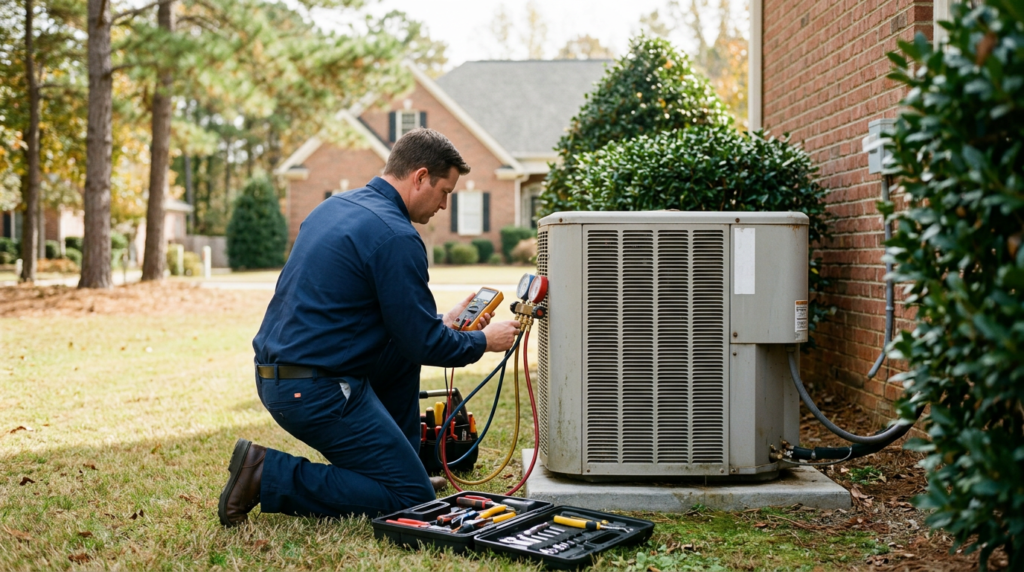
A solid diagnosis goes beyond swapping parts. Expect basic electrical checks (voltage, safeties, amperage), combustion testing for gas furnaces, inspection of burners and flame quality, and verification that the blower and duct system are moving the right amount of air. For heat pumps, that often includes checking defrost operation, outdoor coil condition, and refrigerant performance indicators.
Ask for a plain explanation of what failed, what caused the failure (dirty filter, blocked venting, water in a pressure switch line, worn contactor), and what could fail next based on the system’s condition. If you’re deciding between repair and replacement, request a written estimate for both paths so you can compare the near-term fix against the likelihood of additional repairs over the next few winters.
To get this checked safely and correctly, schedule an inspection with a licensed HVAC technician; Billy Butler HVAC is a local place to get help.