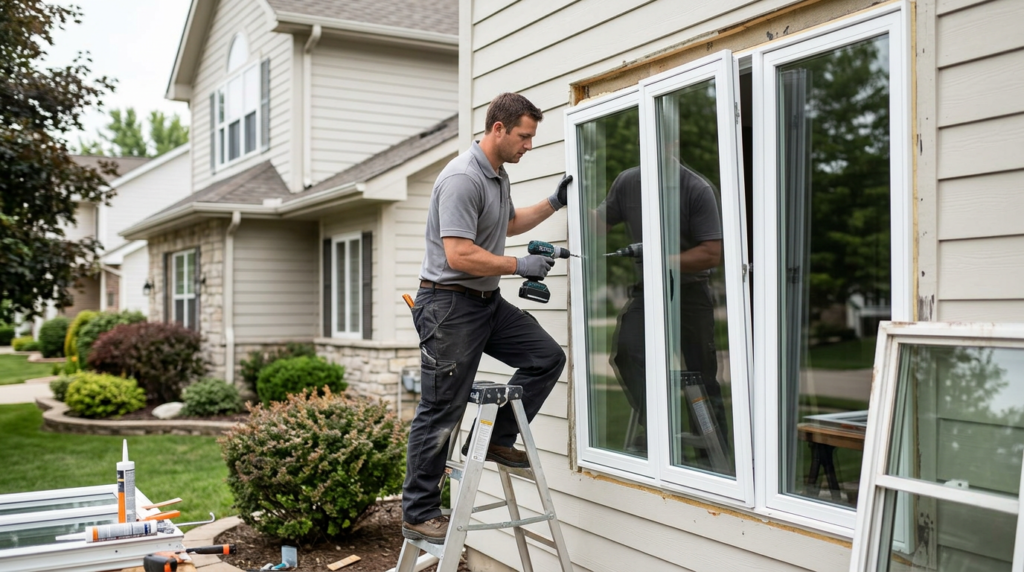
Quick answer: Choose a window replacement company by confirming they measure each opening on-site, specify the exact window line and glass package in writing, and explain how they’ll handle water management (flashing, sill pan, and exterior trim). Ask who does the install (employees or subs), what the workmanship warranty covers, and how they protect your home. Compare apples-to-apples quotes and timelines.
What To Ask Before You Schedule An Estimate
Start by treating the estimate like an interview. A solid contractor will measure carefully, inspect the condition of the existing frame, and discuss what kind of installation you actually need (insert/pocket vs full-frame). If the salesperson only talks about discounts and avoids details on installation steps, that’s a red flag.
Ask for specifics in writing: the manufacturer and model, frame material (vinyl, fiberglass, wood/clad), glass package (double vs triple pane, low-E coatings), and hardware/finish. Also ask what’s included around the window—new exterior trim, interior stop, caulk, and paint/stain touch-up. If you’re searching window replacement near me, you’ll get better comparisons by requesting the same scope from every company.
Finally, ask who will do the work. Some companies use subcontractors; others use in-house crews. Either can be fine, but you want a clear point of contact, a defined daily schedule, and a plan for protecting floors, furniture, and landscaping.
Installation Details That Separate Good From Bad
Most window complaints come from installation, not the window itself. Water management is the big one. Ask how they handle the sill area and flashing. A careful installer will address the sill condition, use appropriate flashing methods, and seal in a way that sheds water instead of trapping it behind trim.
Also ask how they’ll deal with out-of-square openings. Older homes often have openings that are slightly racked. The crew should be able to explain how they shim, fasten, and insulate so the window operates smoothly and doesn’t bow. Foam insulation should be low-expansion around windows; the wrong product can warp frames.
Noise, drafts, and condensation are useful clues. Drafts around the edges point to air-sealing problems. Condensation between panes usually indicates a failed seal in insulated glass. Condensation on the room-side surface often relates to indoor humidity, but a good contractor can explain how glass options and air leaks affect it.
How To Compare Quotes Without Getting Tricked
A low bid can be legitimate, but it can also mean less work around the opening. Compare line by line: number of windows, exact sizes (or “field-verified”), glass type, grids, screens, exterior trim method, disposal, and permit responsibility if one is required in your area. If one quote is vague (“install new windows”) and another is detailed, the detailed one is easier to hold accountable.
Use a simple checklist and make each bidder fill in the same blanks:
| Item to match across bids | What to look for in writing |
|---|---|
| Window line | Brand + series/model name |
| Glass package | Low-E type, panes, gas fill, tempered where required |
| Install type | Insert/pocket vs full-frame (and why) |
| Flashing/sill pan scope | Sill condition, sill pan/flashing approach, sealing details |
| Trim/paint | Interior/exterior trim included, caulk, paint/stain responsibility |
| Disposal | Removal/haul-off of old windows and jobsite cleanup |
| Permits | Who pulls permits (if needed) and who schedules inspections |
| Warranty terms | Manufacturer vs workmanship coverage, service-call process |
Ask about lead times and what triggers delays (special-order colors, tempered glass requirements near doors or tubs, and custom shapes). Get the payment schedule in writing. Many contractors use a deposit with the balance due at completion; avoid paying most of the total before materials are ordered or work begins.
How To Verify A Contractor Is Legit
Ask for proof of insurance (general liability and workers’ comp) and verify it directly with the insurer listed on the certificate. If your state or municipality requires a license for this type of work, look up the license number on the official state or local website and confirm it’s active and in the company’s legal name.
Insist on a written contract that matches the quote. It should spell out the window specs, installation method, start/finish expectations, change-order process, cleanup, payment schedule, and warranty language. If anything is “verbal,” it’s easy for both sides to remember it differently later.
If you care about manufacturer authorization, don’t rely on a logo on a brochure. Ask what makes the installer “authorized” (dealer status, trained installer network, or simply a reseller) and confirm by checking the manufacturer’s dealer locator or calling the manufacturer with the company name.
Contact Georgia Home Windows to schedule an on-site measurement and written scope.