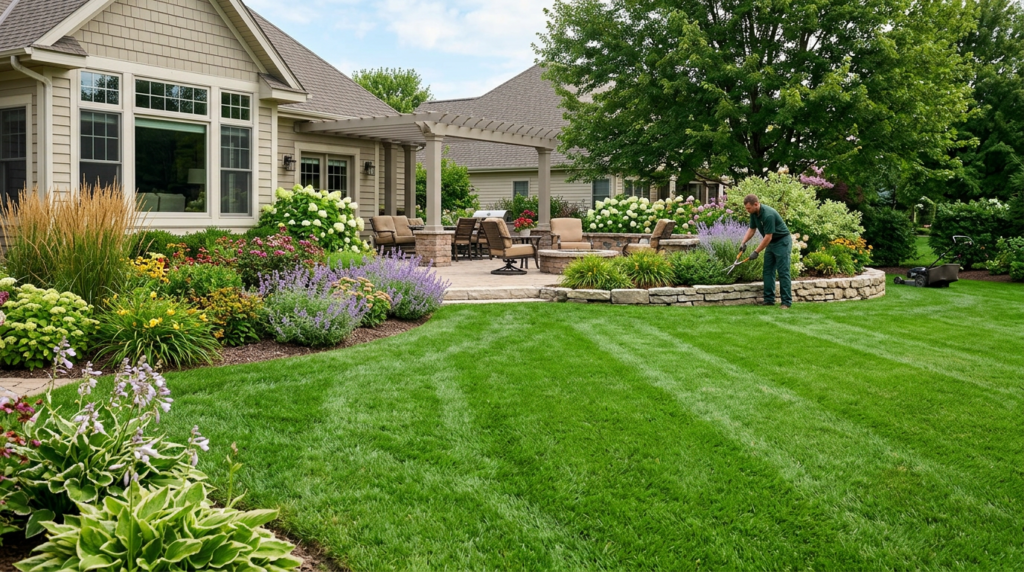
Quick answer: Lawn care focuses on keeping grass healthy and presentable through mowing, edging, fertilizing, weed control, aeration, and overseeding. Landscaping is broader and deals with the design, installation, and upkeep of beds, shrubs, trees, mulch, drainage, and hardscape elements like stone borders or patios. Many homeowners use both: lawn care for weekly curb appeal and landscaping for long-term function and style.
What Lawn Care Usually Includes
Lawn care is the repeatable, seasonal routine that keeps turf dense, green, and resilient. Think mowing at the right height, edging along sidewalks and beds, trimming around obstacles, and blowing debris off hard surfaces so the whole yard looks finished.
Beyond mowing, good lawn care is about timing. Spring and fall fertilization, pre-emergent weed control, aeration to relieve compaction, and overseeding to thicken thin spots all work together. If you’re comparing providers, ask what they consider part of their landscaping and lawn care scope, and what is billed as an add-on (for example, leaf cleanup, dethatching, or grub treatment).
Common signs your lawn needs more than a weekly mow: persistent bare patches, spongy ground, lots of weeds returning after each cut, standing water after rain, or mower “scalping” because the ground is uneven.
What Landscaping Covers (And Why It’s Different)
Landscaping deals with the parts of your yard that aren’t just turf. It includes designing and installing planting beds, shrubs, trees, groundcover, mulch or stone, and sometimes lighting, drainage solutions, and hardscape features like walkways or retaining walls.
The goals are different from lawn care. Landscaping aims to shape how the yard functions and feels: guiding foot traffic, improving privacy, reducing erosion, managing water, and building year-round color and structure. Maintenance can be seasonal rather than weekly—pruning, bed edging, mulching, plant replacement, and keeping beds weeded.
Landscaping work also has more “right vs. wrong” decisions up front. Plant choice, spacing, sun exposure, soil drainage, and mature size matter. A shrub planted too deep or too close to a foundation can create problems that don’t show up for a year or two.
How to Decide What You Need Right Now
If the yard looks fine right after mowing but declines a few days later, you likely need a better lawn-care program (mowing height, fertilization, weed control, or aeration). If the lawn looks okay but the property still feels messy or unfinished, landscaping maintenance—bed cleanup, fresh mulch, pruning, or redefining edges—often makes the biggest visual impact.
Drainage issues blur the line. Standing water, mossy areas, and washed-out mulch can start as a “lawn problem” but may require landscaping fixes like regrading, downspout extensions, or a dry creek bed. Bring a short list of symptoms to an estimate: where water collects, which areas thin out first in summer, and any spots that stay soggy.
For most homes, a sensible plan is to stabilize the turf with proper mowing and seasonal treatments, then tackle landscaping upgrades in phases—starting with the front entry and the most visible bed lines.
Questions to Ask Before Hiring a Yard Pro
Ask how they set mowing height and whether they adjust it by season. Cutting too short is a common reason lawns get weedy and stressed in heat. Also ask how they handle clippings, edging, and cleanup—those small details separate “cut grass” from a finished look.
For landscaping, ask what plants they recommend for your sun exposure and how they’ll prepare the bed (weed barrier choices, mulch depth, and edging). Clarify who handles pruning standards, especially for shrubs near windows and trees near roofs or power lines.
If you want help sorting out a practical plan for your property—routine lawn care, bed maintenance, and tree/shrub needs—White Oak Tree Company can help.