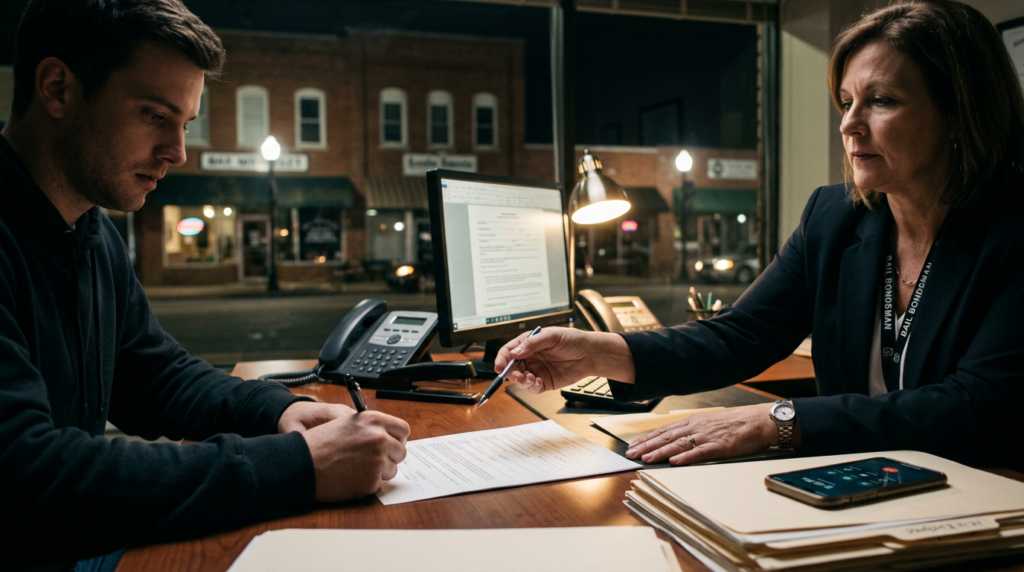
Quick answer: Emergency bail bonds in Smithfield, NC let a bondsman start the release process outside normal business hours. You’ll usually provide the defendant’s full name, date of birth, where they’re being held, and the bond amount (or booking info if it isn’t set yet). The bondsman explains the legally set premium, paperwork, and any collateral that may be required. Release timing still depends on the facility’s processing and any court or hold requirements.
What Counts as an “Emergency” Bail Bond Call
An emergency bail bond usually means you need help at night, on a weekend, or during a holiday—times when families can’t wait for offices to open. The goal is to get the bond posted as soon as the facility and the bondsman can complete their parts, not to skip normal legal steps.
If you’re searching for emergency bail bonds Smithfield NC, have key details ready so nothing gets delayed: the person’s legal name, date of birth, the facility where they’re booked, booking number (if you have it), the charge, and the bond amount. If you don’t know the bond amount yet, a bondsman can often still tell you what information they’ll need once it’s set.
Smithfield/Johnston County timing details that can matter (varies by facility): arrestees are commonly booked through the Johnston County Sheriff’s Office detention operations, and after-hours release can move slower if staffing is lean or if a shift change is underway; some facilities also have specific windows for property return and discharge paperwork; and if someone is transferred between a city agency and the county jail after initial arrest, the bond may not be accepted until the person is fully entered into the receiving facility’s system.
What You’ll Be Asked for and Why It Matters
The bondsman’s questions help determine whether the bond can be written and what risk is involved. Expect requests for identity and location details, the bond amount and type (secured, unsecured, or written promise, if the paperwork shows it), and who will be signing as the indemnitor (the person financially responsible for the bond).
Release can still be delayed even after a bond is posted. Common examples may include a second charge in another county, a probation/parole hold, an immigration detainer, or a judge’s order requiring a first appearance before release (varies by case and facility). A careful phone call up front helps you avoid paying for speed you can’t actually get.
Smithfield/Johnston County detail that can affect timing (varies by facility): if the defendant has a scheduled first appearance or conditions set by a magistrate that require verification (like a no-contact order or address confirmation), the jail may wait for that documentation to be entered before releasing.
Fees, Collateral, and Paperwork to Expect
In North Carolina, the bail bond premium is generally set by state law and Department of Insurance regulation for licensed bail bond agents rather than negotiated. A common premium for a surety bond is 15% of the bond amount, but you should still ask the bondsman to point you to the current rule that applies to your situation and to explain what the premium covers.
Collateral isn’t required in every case, but it may be requested for higher bonds or higher-risk situations. Collateral may include a deed, vehicle title, or other valuable property, and it should come with written terms about how it’s held and when it’s returned. Don’t hand over collateral without a receipt and a clear description of the conditions for return.
Paperwork commonly includes the bond agreement, an indemnity agreement, and collateral documents if applicable. Ask what identification you need (often a government-issued ID) and whether documents can be signed electronically after hours, since after-hours signing procedures vary by bondsman.
How to Avoid Delays and Know What to Do Next
Emergency bail moves faster when you treat it like a logistics problem: gather the right info, identify who can sign, and confirm what the facility will actually allow at that hour (varies by facility). Keep your phone available and answer unknown numbers—missed calls can add real time.
Quick checklist:
• Gather: full legal name, DOB, booking number (if available), facility location, charges, bond amount (or confirmation that it hasn’t been set), and the defendant’s address and employer if known.
• Decide who signs: the indemnitor should be someone who can answer questions, sign quickly, and follow up to help the defendant make court dates.
• Ask the bondsman: what premium applies under NC rules, whether collateral may be required, how after-hours paperwork is handled, and what could block release (holds, first appearance, transfers).
• Ask the jail/facility (varies by facility): whether the bond has been set, whether there are any holds, whether the person is fully booked into that facility yet, and whether there are discharge/release processing windows overnight.
Decision point: if no bond has been set yet, or the facility reports a hold/detainer or a required first appearance, you may not be able to bail out immediately. In that situation, the next step is to confirm what event clears the block (bond hearing, first appearance, hold release) and the earliest time it can happen, then plan your bond paperwork around that timeline. For help, call any licensed NC bail bond agent and ask the questions above; Get Out Bail Bond is one local option.