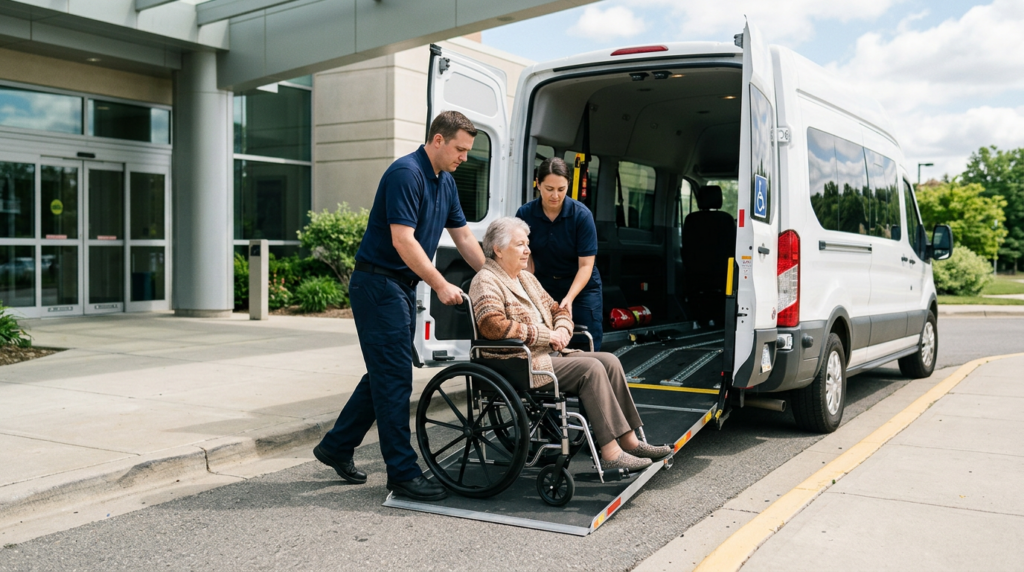
Quick answer: Long-distance patient transportation usually starts with a quick intake to confirm the patient’s mobility, medical needs (like oxygen), and the pickup/destination details. The provider then matches the trip to the right vehicle and crew, confirms timing and paperwork, and completes safe transfers on travel day with planned breaks as needed. If symptoms are urgent or unstable, an ambulance/911 is the safer choice.
What “Patient Transportation” Means for Long Trips
Long-distance medical trips are different from a quick ride to a local clinic. The goal is to move someone safely between cities or states while keeping comfort, stability, and continuity of care front and center. That can include help from bed-to-stretcher, careful positioning to reduce pain or pressure issues, and planning for breaks during a multi-hour drive.
Most people use patient transportation for hospital discharges, transfers to rehab or skilled nursing, returning home after surgery, or getting to a specialty appointment that isn’t available nearby. The details matter: stairs at pickup, narrow hallways, the patient’s ability to sit upright, and whether they fatigue easily can change the safest setup.
Long-distance transport also means thinking ahead about the “in-between” moments—medication timing, bathroom needs, keeping documents accessible, and having a plan if symptoms worsen on the road. A good provider will talk through these practical realities before confirming the trip.
Typical Booking Workflow
Typical booking workflow (general example):
It often follows a predictable sequence: an intake call to understand the situation → key information is collected (mobility, medical needs, addresses) → the trip is matched to an appropriate vehicle and crew → a confirmation call/text typically reviews timing, pickup instructions, and any paperwork → on the day of transport you’re usually given a pickup window → during the trip, updates are often provided through a dispatcher or the transport team, depending on the provider’s process.
Sharing accurate details early usually helps reduce the chance of delays or rebooking, especially for long drives where equipment, staffing, and facility timing all need to line up.
Choosing the Right Level of Transport
The safest ride depends on how stable the patient is and what support they need during transit. Many long-distance transports are non-emergency, but still require trained staff and equipment. Common options include wheelchair vehicles for patients who can sit and transfer with assistance, and stretcher vehicles for patients who must remain lying down or can’t tolerate a seated position for hours.
Ask specifically about monitoring and equipment needs. If oxygen is required, confirm the flow rate and how long the supply is planned to last for the full route plus potential delays. If the patient has a feeding tube, catheter, recent surgery, dementia, or a high fall risk, describe that up front so the crew can plan safe positioning, securement, and transfer methods.
Choose an ambulance/911 instead if the situation is time-sensitive or unstable—for example chest pain, severe shortness of breath, uncontrolled bleeding, new confusion or one-sided weakness, fainting, a suspected stroke, or any rapid decline. Non-emergency transport is generally for patients who are medically stable enough for a scheduled ride.
What to Prepare and What You’ll Be Asked For
Preparation is easier if you treat it like a simple checklist.
Information you’ll typically be asked for:
- Pickup address and exact location (room number, unit, discharge area, gate code)
- Destination address and exact drop-off point (facility name, unit/room, entrance instructions)
- Mobility level (walks with help, wheelchair, needs stretcher, can they stand/pivot)
- Height/weight if relevant for safe lifting/equipment fit
- Oxygen needs (device type and flow rate), and any other required equipment
- Medical considerations (recent surgery, dementia, fall risk, tubes/lines)
- Stairs, tight hallways, elevators, or other access barriers at both ends
- Escort rider request (who, relationship, and whether they can assist)
What to have ready before pickup day:
- Medication list and doses for the travel window, plus any “as needed” meds you may have to administer
- Discharge paperwork, ID/insurance card if the receiving facility needs it, and key phone numbers
- Comfort items (light blanket, pillow) and appropriate clothing for long sitting/lying
- Small bag with essentials that stays with the patient (not packed in a trunk if access is needed)
- Plan for bathroom needs and rest stops if the trip is several hours
- Clear the pathway at home (move rugs/clutter, confirm bed location and doorway widths)
Questions to Ask Before You Book
These questions help you confirm the ride matches the patient’s needs.
Booking questions checklist:
- What vehicle type will be used (wheelchair vs. stretcher), and why is it the right fit?
- What level of staff will be assigned, and what kind of monitoring can they provide?
- How is oxygen handled (supply planning for the full route plus delays)?
- How are transfers done at pickup and drop-off (stairs, narrow doors, bed transfers)?
- What is the pickup window, and how are timing updates communicated?
- How are rest stops handled, and can the team assist with toileting if needed?
- What paperwork is required from the sending facility, and who coordinates it?
- What happens if the patient’s condition changes during transport?
- Can a family member ride along, and what are the expectations for their role?
For help arranging long-distance medical transport with clear expectations and careful coordination, contact Managed Medical Transport, Inc.