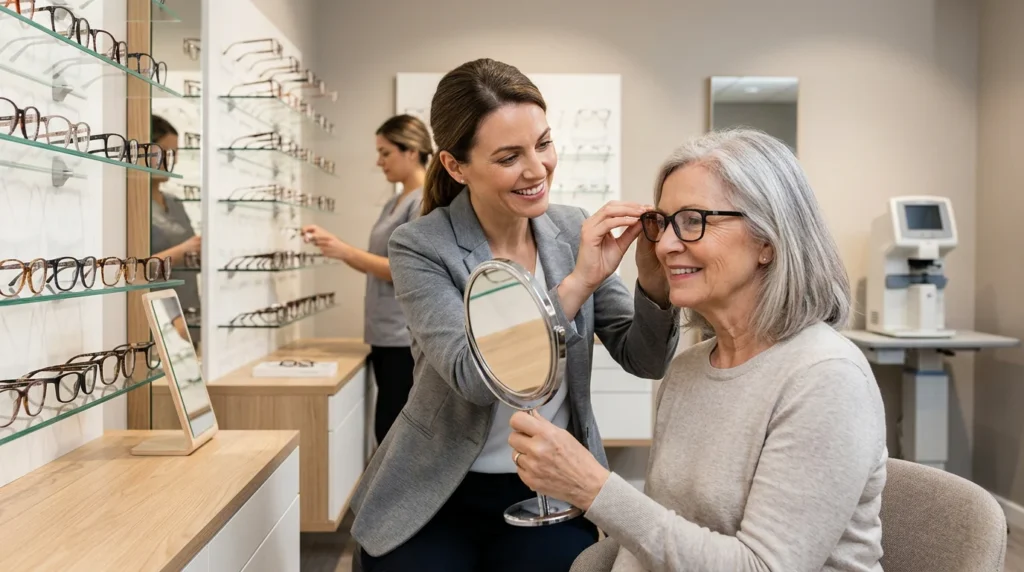
Quick answer: Optical services usually cover the steps between an eye exam and wearing finished glasses: choosing frames, selecting lens designs and coatings, taking precise measurements, and fitting/adjusting eyewear. Many optical shops also handle prescription sunglasses, specialty lenses (computer, safety, sports), basic repairs, and troubleshooting comfort or clarity problems. Confirm which options are available at your specific location before you order.
What “Optical Services” Usually Means
Optical services are the bridge between your prescription and the eyewear you actually wear every day. After an exam, an optical team generally helps you pick frames that fit your face and comfort needs, then matches your prescription to the right lens design. For a starting point on what an optical department may cover, you can review Georgia Eye Clinic optical services and then confirm what’s currently available at the office.
Most optical departments handle the details that make glasses work well: accurate measurements (like pupillary distance and segment height for progressives), lens material selection, and final fitting. Those steps matter because even a correct prescription can feel “wrong” if measurements are off or the frame sits poorly.
Optical services can also include prescription sunglasses, blue-light filtering options, safety eyewear, and help coordinating your eyewear choices with your daily tasks—computer work, driving, sports, or reading.
Lens and Frame Choices That Make the Biggest Difference
Frames are more than style. Fit affects comfort, vision alignment, and how well lenses perform. If your glasses slide down, pinch behind the ears, or sit too close to your lashes, you’ll notice it all day. An optician can check bridge fit, temple length, and how the frame sits on your nose and ears, then adjust it so the lenses line up correctly with your eyes.
For lenses, the big decision points are usually single-vision vs. bifocal vs. progressive, plus material and coatings. High-index lenses can reduce thickness for stronger prescriptions. Polycarbonate or Trivex are common for impact resistance, which can be useful for kids or active jobs. Anti-reflective coating often helps with night driving glare and screen reflections, while photochromic lenses can be convenient if you go in and out frequently.
If you’ve struggled with progressives before, ask about corridor length and frame height. A frame that’s too shallow can make the reading area feel cramped, and that’s a common reason people think they “can’t wear” progressives.
Common Problems Optical Staff Can Fix
Many glasses issues are fixable without changing your prescription. Blurry areas can come from lenses sitting too far from your eyes, a tilted frame, or progressives centered too high or low. Headaches can be related to an inaccurate pupillary distance measurement, an uncorrected astigmatism issue, or simply trying to adapt to a new lens design too quickly.
Physical discomfort is often adjustment-related. Tightness at the temples, red marks on the nose, or crooked frames can usually be corrected with a careful fitting. Minor repairs—like replacing nose pads, tightening screws, or re-seating lenses—are common requests too.
If your vision feels suddenly “off,” don’t assume it’s just the glasses. Rapid changes, double vision, flashes, or a curtain-like shadow need prompt medical attention. Optical troubleshooting helps most with comfort and alignment problems, not urgent eye symptoms.
Confirm Availability With Georgia Eye Before You Order
Optical offerings can vary by location and by what’s in stock, so it helps to call ahead. Here’s a quick checklist of what to verify with Georgia Eye:
Ask if they currently have a frames inventory you can browse, and whether they can order specific brands or sizes. Confirm they offer progressives (and which types), prescription sunglasses, and any specialty options you care about (computer lenses, photochromic lenses, high-index materials, anti-reflective coatings).
Also confirm whether they do on-site repairs/adjustments (nose pads, screws, frame alignment), whether safety eyewear is available, and whether they provide contact lens services if that’s something you need. Before you go in, ask about typical turnaround time, what follow-up adjustments are included, any warranty/redo policy, and which vision insurance plans they can bill.